

Got a Lift? How to Maintain a Lifted Truck Purchased Off the Used Lot

The market for used lifted trucks for sale is flourishing as more people discover the benefits of a lifted truck. For some, those benefits are solely related to design and style elements, but for others, the lift gives them more opportunities to venture off the beaten path and down the trail. For another segment, a lifted truck combines style and capability. In any instance, a truck with a lift requires routine maintenance like any standard truck, with more specific services and maintenance requirements depending on the type of lift.
As you shop for a used lifted truck, it’s essential to know what type of lift the truck has. For example, is it a body lift kit, a suspension lift, or a leveling kit? What brand of kit was used, and was it factory installed? In most cases, a used lifted truck will have an aftermarket kit. Knowing the type and brand of kit helps you proactively extend the life of the truck by following the manufacturer’s recommended service intervals. Let’s break it down even further.
Types of Truck Lifts and General Maintenance Needs
Factory-installed lifts are relatively new to the truck industry, as automakers like Ford, Ram, Toyota, and Chevrolet rush to answer the growing demand for more capable and adventurous workhorses. Because of this, you’ll likely find more used trucks with aftermarket lifts in your search than ones installed on the factory floor. This has some advantages and disadvantages.
Factory-installed lifts are straightforward to maintain because their specific maintenance needs are outlined in the owner’s manual and are considered part of the truck’s routine maintenance, such as oil changes and tire rotations. Similarly, factory-installed lifts are covered by the manufacturer’s warranty, which minimizes out-of-pocket expenses and adds incredible value, especially if you find a newer model with a factory lift on the used lot.
In contrast, aftermarket lifts sometimes void the warranty on a truck, which may not be a factor depending on the age of the used truck you’re interested in buying. Additionally, you’ll have to do a little more research on the type of lift installed and the brand used. Why? Lifts require different types of maintenance, with many lift manufacturers outlining recommended service intervals that ensure you get the most out of the kit. So, what are your options and maintenance responsibilities?
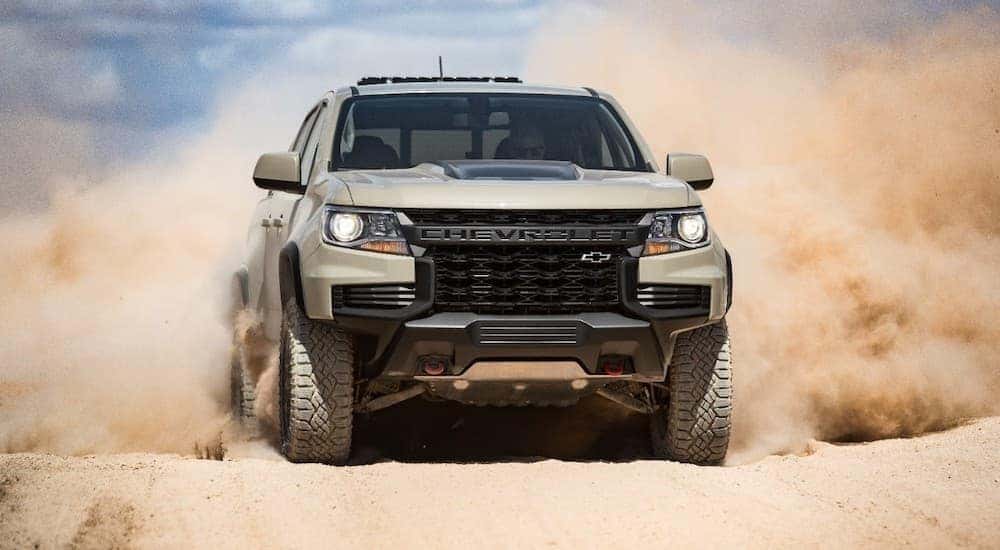
Body Lift
Body lift kits are typically found on trucks that spend a lot of time on the pavement, i.e., road warriors. The kit doesn’t enhance the truck’s performance or improve its ground clearance because it only lifts the body, keeping the chassis and suspension at the same level. It’s a simple design that relies on spacers to separate the truck’s frame from the suspension. As a result, body kits are affordable and relatively easy to install from the comfort of your garage.
While it doesn’t affect a truck’s performance, body lifts are popular because they’re an affordable way to enhance a truck’s appearance. For example, body lift kits can increase a truck’s height up to five inches and give you the necessary clearance to add larger tires, up to 33 inches in most cases. The bigger tires can cause a slight decrease in fuel economy and road noise, but the body lift doesn’t impact the truck’s handling or ride quality. As a result, they’re prevalent among drivers that prioritize comfort but want to give their trucks a distinct look.
Because body lifts don’t alter the truck’s performance or chassis, maintaining a used truck with a body lift requires the same services as a standard truck. Beyond routine oil changes and fluid checks, you may spend more money on larger tires. As with any new tire purchase, you’ll also need an alignment and routine tire rotations to extend the life of the tire, improve fuel economy, and optimize performance.
Leveling Kit
A leveling kit is another popular option you’ll find throughout your search for used lifted trucks. Why? Like a body lift, a leveling kit is an affordable and easy way to enhance a truck’s aesthetic.
Leveling kits raise the truck’s body away from the axles, increasing a truck’s ground clearance and allowing for larger tires, at least one to two sizes larger than stock. While a suspension lift does the same, a leveling kit is far less complex. Instead of dramatically affecting the suspension and other components, a leveling kit typically increases the height at the front of the truck so that it’s level with the rear. Installation is straightforward, requiring torsion keys or spring spacers.
The greatest advantage to buying a truck with a leveling kit is being able to run larger tires. On a stock truck, larger front tires typically rub against the front fenders or bumper when turning. Since the leveling kit increases the truck’s clearance, you can add larger tires to all four corners. In addition, the leveling kit is beneficial when adding a winch or plow to the front of the truck since it makes the truck more capable of bearing the weight without causing the suspension to sag or lowering the overall ride height.
Regarding maintenance, a used truck with a leveling kit is incredibly easy to maintain. For example, an inexpensive leveling kit usually keeps the factory shocks, while higher-end kits require new shocks to improve handling. In any case, the truck’s original owner likely oversaw this installation along with the necessary alignment to adjust the truck’s caster for more responsive on-road handling. Since alignments are often routine services, you can always have the lifted truck aligned to ensure it’s handling and responding correctly.
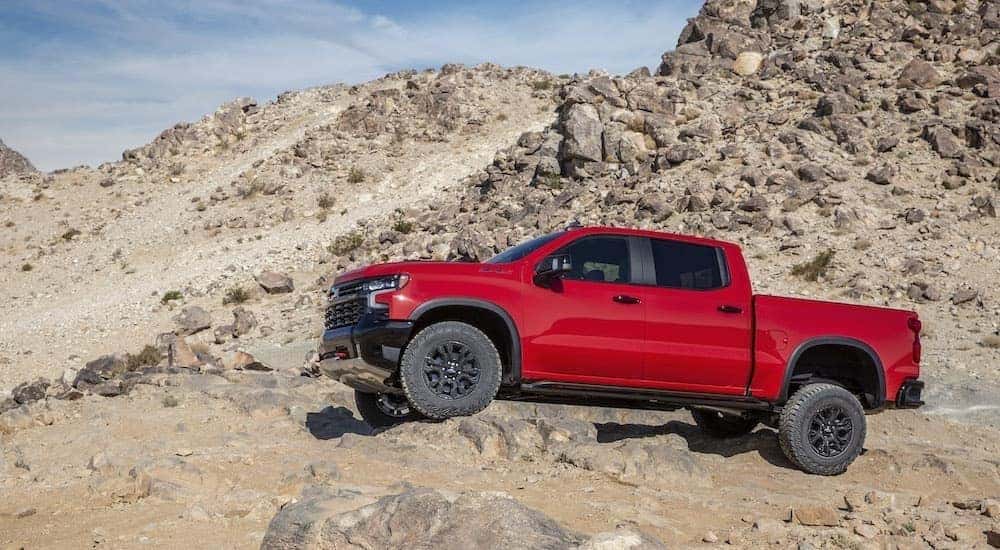
Suspension Lift
Suspension lifts are the most complex type of lift available and dramatically impact a truck’s handling, appearance, and capability. As a result, suspension lifts aren’t something you can do from the convenience of your garage and require the expertise of a skilled technician. During installation, the technician will install the kit, which features new shocks, springs, and control arms, bend the brake lines, and build a new driveshaft if needed.
The expansiveness of a suspension lift increases a truck’s ride height and ground clearance making it possible to add larger tires and dramatically impacts handling because it increases body roll by affecting the truck’s geometry. These modifications make suspension lifts must-haves for many off-road trucks that face technical terrain where larger tires, better articulation, and higher ground clearance are necessary. In practical terms, these changes mean being able to add up to 40-inch tires and increasing a truck’s height up to 10 inches.
Because a suspension lift significantly impacts a truck’s geometry, maintaining a used truck with this type of lift requires a little more effort. For example, larger tires are more expensive, affect fuel economy, and require regular upkeep, especially when navigating technical terrain where there’s a heightened risk for damage. In addition, a suspension lift also puts extra stress on your drivetrain, specifically when venturing off the pavement, which makes it critical to ensure your drivetrain fluids are frequently checked and changed. Likewise, you’ll see faster wear and tear on the ball joints and tie rods because the suspension lift stresses the steering components even when you stick to the pavement.
Choosing What’s Right for You
Lifted trucks come in all varieties, especially on the used lot, where their prices are more affordable, and the options are seemingly endless. As you discover this for yourself, think about how you plan to use the truck and the money you’re willing to invest in its upkeep and routine maintenance. While a body lift is hassle-free, it doesn’t provide the same aesthetic as a leveling kit. Neither a body lift nor a leveling kit compares to the aggressive and imposing stance of a truck with a suspension lift. Narrowing your choices comes down to your driving style, where your next adventure will take you, and how much money and time you’re willing to invest in maintaining your next road warrior.
0 comment(s) so far on Got a Lift? How to Maintain a Lifted Truck Purchased Off the Used Lot